

Here is the direct answer most new and even experienced authors miss: Amazon KDP pricing is not just about picking a number that feels reasonable.
It is a strategic decision that affects royalties, algorithm visibility, keyword performance, category ranking, and long-term sales velocity.
A book priced incorrectly can fail even with strong content and good reviews, while a well-priced book can outperform expectations in competitive niches.
How Amazon KDP Pricing Actually Works
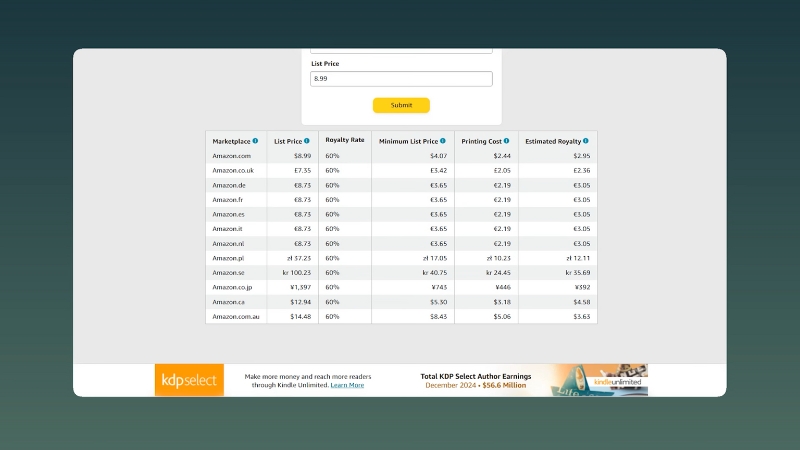
On Amazon Kindle Direct Publishing, price influences multiple systems simultaneously. It affects your royalty percentage, but it also affects how easily readers click Buy when they encounter your book in search results or category lists.
Amazon’s algorithm does not reward ambition or confidence. It rewards sales velocity and consistent conversion.
A price that is technically profitable but suppresses conversion will often earn less than a lower price that enables higher volume. This trade-off is central to KDP’s pricing strategy and cannot be ignored.
Ebook Royalties: Understanding the 35 Percent vs 70 Percent Split
Amazon offers two royalty structures for Kindle ebooks. Which one applies depends primarily on price.
The 70 percent royalty option applies when your ebook is priced between $2.99 and $9.99 in eligible marketplaces. From this amount, Amazon subtracts a delivery fee based on file size.
For text-heavy books, this fee is usually negligible. For image-heavy books such as cookbooks or technical manuals, the fee can meaningfully reduce net royalties.
The 35 percent royalty option applies when your ebook is priced below $2.99 or above $9.99, or when sold in certain regions. There is no delivery fee at this tier, but the lower percentage almost always results in lower earnings per sale.
Kindle Ebook Royalties by Price
| Ebook Price | Royalty Rate | Approx. Net per Sale |
| $0.99 | 35% | ~$0.35 |
| $1.99 | 35% | ~$0.70 |
| $2.99 | 70% | ~$2.00 |
| $4.99 | 70% | ~$3.40 |
| $9.99 | 70% | ~$6.80 |
| $10.99 | 35% | ~$3.85 |
This table highlights why $2.99–$4.99 is the most common pricing range for successful Kindle ebooks. It balances conversion and revenue efficiency.
Paperback and Hardcover Pricing: Fixed Costs Change Everything
Print books follow a different financial logic. Amazon deducts printing costs first, then applies a fixed royalty percentage. This means that price increases do not scale profits linearly.
Printing costs depend on page count, trim size, and ink type. Thin books priced too low often earn almost nothing per sale, while thicker books can justify higher prices without harming conversion if they align with category expectations.
Paperback Economics in Practice
| Page Count | List Price | Print Cost | Approx. Royalty |
| 120 pages | $8.99 | ~$2.30 | ~$1.40 |
| 200 pages | $12.99 | ~$3.60 | ~$3.20 |
| 300 pages | $15.99 | ~$4.80 | ~$4.80 |
Print pricing must account for physical constraints. Undervaluing a print book is one of the fastest ways to erase margins.
Pricing and Amazon’s Algorithm: Conversion Matters More Than Price
Amazon’s recommendation and ranking systems respond primarily to sales velocity and conversion rate, not price in isolation. A lower-priced book that converts well can outperform a higher-priced book even if the latter earns more per sale.
For new releases, this is especially important. Early momentum signals tell Amazon whether to surface your book in “also bought” sections, category lists, and search results.
Pricing that suppresses early conversion can permanently limit reach.
Keywords: Pricing Determines What You Can Rank For
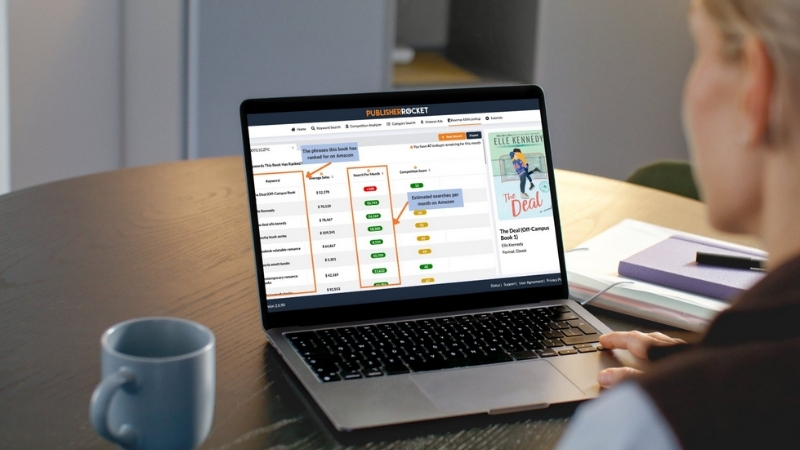
Keywords control visibility. Pricing determines whether that visibility turns into sales.
Highly competitive keywords require strong conversion to maintain ranking. If your book appears for a competitive keyword but fails to convert due to price friction, it will lose ranking quickly.
Lower prices typically allow books to:
- Compete for broader keywords
- Accumulate reviews faster
- Maintain ranking with fewer impressions
Higher prices are viable primarily in niches where readers expect specialized or professional content.
Pricing Strategy by Keyword Competition
| Keyword Difficulty | Typical Reader Expectation | Effective Price Range |
| Low | Niche or hobby | $3.99–$7.99 |
| Medium | Popular topic | $2.99–$4.99 |
| High | Mass-market | $2.99–$3.99 |
Pricing above category norms in competitive keyword spaces usually leads to suppressed rankings.
Categories: Why Lower Prices Often Rank Higher
Amazon category rankings are based on unit sales, not revenue. One sale counts the same regardless of whether the book costs $2.99 or $9.99.
This creates a practical strategy: lower prices often enable faster category climbs, which increase visibility and drive additional sales. Once a book establishes rank, price can sometimes be raised without losing position.
This dynamic is especially important in smaller subcategories where a modest number of daily sales can secure a top position.
Category Ranking Mechanics
| Factor | Effect on Rank |
| Unit sales | Primary |
| Price | Indirect |
| Reviews | Secondary |
| Sales consistency | High |
Authors who ignore category mechanics often misinterpret why their book remains invisible.
Launch Pricing vs Long-Term Pricing
Launch pricing should prioritize data and momentum, not profit per sale. Early pricing decisions influence:
- Review velocity
- Keyword traction
- Algorithm confidence
Many successful authors launch at the low end of the 70 percent royalty range, then adjust upward once rankings stabilize. Static pricing from day one often limits growth.
Kindle Unlimited: Pricing in a Page-Read Economy
View this post on Instagram
When a book is enrolled in Kindle Unlimited, page reads become a major revenue driver. In this model, price affects discovery more than income.
Lower prices tend to increase borrowing, which increases page reads. However, KU does not eliminate pricing considerations. Non-subscribers still see the list price, and extreme underpricing can reduce perceived value.
KU pricing works best when aligned with:
- Genre norms
- Series strategy
- Reader expectations
Common Amazon KDP Pricing Mistakes
Most pricing failures repeat the same patterns.
One frequent mistake is pricing too low without a strategy. Permanent $0.99 pricing attracts bargain readers who often do not leave reviews or continue a series.
Another is pricing high without proof. New authors pricing ebooks at $9.99 with no reviews usually experience poor conversion, regardless of content quality.
A third is ignoring format differences, especially pricing ebooks and paperbacks too closely together, which discourages ebook purchases.
Pricing Mistakes and Their Consequences
| Mistake | Typical Outcome |
| Too low long-term | Weak revenue, low-quality audience |
| Too high at launch | Poor conversion, low visibility |
| No pricing adjustment | Stagnant rankings |
| Ignoring print economics | Minimal royalties |
Final Perspective
@publishingprosofficial Things to consider when pricing your book on Amazon KDP! #amazonkdp #amazonkdpcreator #amazonkdpforbeginners #kindledirectpublishing ♬ original sound – Angelina&Chris | Amazon KDP
Amazon KDP pricing is not a one-time choice and not a personal statement about worth. It is a variable that interacts with royalties, keywords, categories, and reader behavior in measurable ways.
Successful authors treat price as a strategic lever, adjusting it based on data rather than assumptions.
When pricing aligns with category norms, keyword competitiveness, and format-specific economics, Amazon’s system has room to work. When pricing ignores those realities, even strong books struggle to gain traction.